
The Chinese pu-erh tea market is very complicated. The term “fake puerh tea” doesn’t mean that tea has been substituted by other material but it means that the name of the tea ( label, wrapper ) is not adequate to the actual product ( elements listed below ) . Simply said …“The Tea is real, just wrapper is wrong” .
1. Age
2. Grade
3. Origin
4. Type of Tea Leaf
5. Selling
6. How to Avoid Fake Tea
1. Age
Seems like very hot topic among the pu-erh tea drinkers last few years. Finally even foreigners abroad started to realize that getting a 20 + years old pu-erh for 100$ or so , is quite …actually even being able to get it online or in some Chinese tea shop …..lol;-)
Read a bit Chinese / Yunnan history from that time, preferably tea related, then make the numbers 🙂

You may think that famous online shop with very good reputation would not dare to sell those kind of teas. No, if they are aware of it. The fact you need to understand , there is a still human ( tea vendor with some experience ) behind the website and not the laboratory. Most of the vendors haven’t been doing tea business 20 or 30 years ago neither drunk the pu-erh tea that time ( not mentioned had been stored some pieces until now , and can compare with new stock coming ) so they sources are just based on trust to their supply. Having some tea for such a long time as 20 years and still not selling it , is very rare ( sold in very closed circles ) and I haven’t met any foreigner yet who would be wiling to pay such a price for genuine one.
Many Chinese tea vendors who are in business for that long already know the tricks , so the emphasizing being in tea biz for so many years, would be a heads up for me. Of course not everyone is cheeky , but the honest one would tell you pretty much the same thing what is mentioned above.
Probably the most ridiculous is Wen Ge – The Cultural Revolution Shu pu-erh tea , pressed into the brick and labeled with dates around 1970’s or so. It comes in various wrappers and prices on online shops like Taobao and then appears among some tea drinkers abroad posting it on soc. media : ” I feel like sitting in time machine , traveling back to the 70’s” :-0

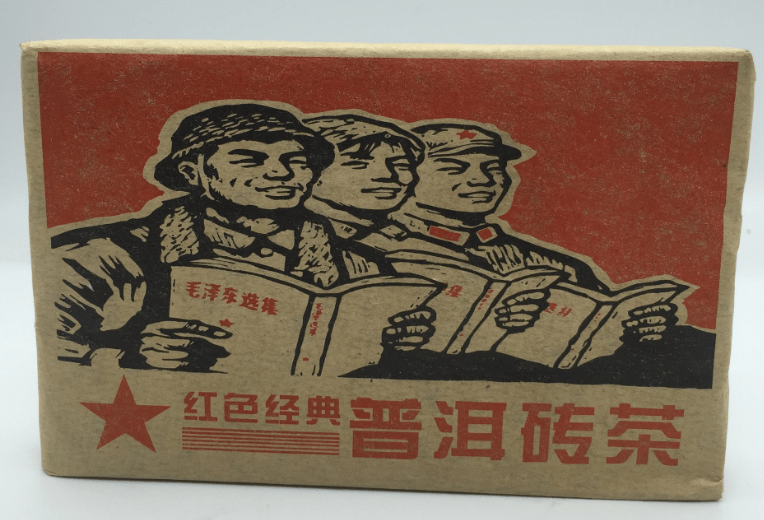


Good tea vendor will try to filter those out and if offer for sale ( some of them might be good teas after all ) , then with honest explanation and obviously with equivalent price tag. The “Tea businessman” would just put it on the site and let the customer decide if it’s genuine ( usually without offering a sample ).


One example of how to recognize “fake” old tea even from the box. Puerh Tea Group. The “Group” word in the company name has been implemented in 2005 , also sticker shows the date 1999 but serial number of registration is 2002.
Said that , you can not entirely rely on your knowledge of the wrappers since faking those has been mastered many moons ago and reached the level as fa as making it eaten by worms so it look authentic old. Just simply sprinkle with 米浆 (rice milk) , wrap it in kitchen foil but the way that ants and worms still can get in and they’ll do the job:-D


More pictures here (Instagram)
The very common and most convenient for sellers is to sell loose shu or sheng pu-erh where the complexity of faking the label doesn’t exist. Just need to put into some bamboo basket and claim the date of your liking. Various techniques are applied as light fermentation for the old shengs or the excessive wet storage for shu puerh. There are also variations / combinations of changing environment from wet to dry or vice versa.
Few factors is good to consider before you make any 20+ years old loose tea. It is not convenient to store big amounts of sheng puerh because big leafs taking lots of space and during the time they are also braking into smaller pieces ( mainly pieces at the bottom of the box ) . Shu pu-erh is made for consumption not for aging and getting 30 or something years old shu pu-erh is very rare these days ( might change in next generation because massive production might not be compensate by demand ) . Legit tea like this , is not sold to someone for few CNY , yet I would be skeptical that any foreigner just come alone and buy it on tea market , then claim “I’ve got it from the trusted source” . Be vigilant to those claims! It is part of the marketing.
2. Grade
Not only the age but also the grade faking can be as far as inventive like mixing very old / unwanted black tea Jin Si ( known as golden tips ) with some cheap grade of shu puerh and pressing it together to make it look like high grade of shu pu-erh called “Gong Ting” . Using few years old Liu Bao tea and pack it as 40y old sheng pu-erh. These kind of things you are not going to hear from your favorite vendor’s Youtube channel neither on some Pu-erh club on social media like Facebook , where any scandals around the tea are not welcomed ( we got burned few times already, so talking from personal experience ) .
very important ! ….If you feel like to share this article with others on some Tea Forum , please do not share it by “copy-paste” method , you will just get your self banned , as we did! Find a smart way how to pass the “message”.
3. Origin
One tea , many labels is the well know concept coming from the place called “ba gong li” ( 8 kilometers ) , which stands for being located 8km from Menghai. Very common processing of very cheap grade of pu-erh tea when mixture of various areas teas or cheap bush tea brought from Lincang area, is pressed into the cakes, brigs ,.etc. , then wrapped into the various labels with different names of the places like Yiwu, Bingdao, Laobangzhan ..etc. These are ending up on Tao Bao or some small vendors on the street sold from 20 – 300 CNY per piece. So far not many foreigners are interested into this concept ( we only know few Russians ) , but if you choose to do this concept from one single batch , you need to separate the tea and store those different labels for some time in different places in order to achieve different taste ( so your Bingdao is not exactly the same as your Laobangzhan ) . In China is proceeded by separating those labels in different provinces with different climate, like Kunming , Guangzhou etc. Experienced pu-erh drinker will spot that something is not right , but honestly…how many experienced pu-erh tea drinkers are out there?

Some of the examples are available here to try (select a sample):
Other way of differing the taste and consequently the name of the tea coming from the same area / batch , is the processing. As we mentioned in our Yiwu tea trip , there are few steps during the fresh tea leafs processing and timing can be crucial to the final taste. Probably the most common is the “wei diao” ( withering ) time , which can control overall characteristic of the flavor scope. This kind of adjustment must be done on the tea farm or processing tea factory.
Smart Cake – is the concept of puer tea cake which looks nice for eye so it is a good seller and has some proprieties of the claim ( the wrapper ) . Typical example would be Bing Dao and Lao Ban Zhang. As the good looking part is usually used Jing Gu mao cha from varietal Jin Pu Hao as this tea has mostly big fat tips. Those will make the cake sexy. The blending part depends on what is going to be. If Lao Ban Zhang , the Jing Gu mao cha is blended with some Bulang mountain material ( usually with some cheap Ku Cha ) , because LBZ is known for it’s bitterness. If Bing Dao , then Lincang material is used ( which is processed by new technique Xin Gong Yi – high temp. kill green ) which is aromatic and flowery , as the real Bingdao would be.


The other quite common way of producing the cheap puerh tea is using the other tea leafs than big leaf varietal from Yunnan. The costs can be significantly different and , in some cases, taste actually nice. Yet, the quality of brews or aging ability is not the same as from Yunnan tea leafs.
4. Type of Tea Leaf
Very common and economy way is blending / mixing. Cheap tea material is used as a base and flavor distinctive material is used as an additional “spice “. Speak of the quality , it could be roughly compared to chocolate products with amount of cocoa, with difference that the same type of material ( tea ) is still used all the time. Speak of the flavor, it could be roughly compared to yogurts made in different fruit editions. Typical example would be Mang Fei tea which apart of the bush tea also lots of small arbors available with sort of flat taste , sustainable quality and low price. Those factors played big role to qualify for the mentioned “base” for blending by companies like Mengku Rongshi, Zhong Cha or Da Yi. Until this years, as we mentioned in our unsuccessful Mangfei trip, the price had change it all. Very common way of faking the Gu Shu is to leave long stems on bush tea with big leafs.
5. Selling
There is lot’s of going on especially on FB tea groups. Random people offering or even just show off the 1000 years old Gu Shu or as far as 60 years old whatever tea, hoping to get some “buy” requests. Read more in Tea Marketing article. You may choose to believe or you can just drop the question in that forum about that you are looking for whatever Gu Shu or whatever old pu-erh , then wait private messages to roll in. You will get very various price offers. It is very hard to determine which one is real and you can rely only on good reputation of the seller in that group ( unless the group is made by the seller him/her self;)
In general I would hard to believe that somebody sells real tea material from very old ancient tea tree, or genuine very old good tea ( of course this will change in 10-20y from now ) for decent price on internet, because demand is already high enough in offline business.
These kind of jewel are being sold in closed groups where trust between buyer and seller is based on longer relationship or previous personal contact, and just simply because big money are usually involved.
So why is some people offering those kind of teas to foreigners? Pretty simple. In China this “fake tea” issue is know already for many years , it has been mentioned in news, papers, local social medias. So people are generally more cautious and don’t go for it anymore , rather chose the taste of the tea. As most of the pu-erh tea drinkers in China who drink pu-erh at least 1 year, they do recognize what they like or not ( which is very different form pu-erh market abroad ) . So sales for those fake teas are dropping down and some smart vendors are trying luck abroad, because foreigners are still known for being easily cheated in that matter. There is plenty of it popping out these days ( like mushrooms after rain ) from Taiwan, Malaysia etc., where is very good environment for fast maturing ( more in Tea Storage article ) .
It is same as wine being imported to China. Very low quality red and white wine is on the shelves available for various prices and bottle with 100$ tag can drop as far as down to 30$ when it’s in sales offer. You can buy 0,7l of red Bordeaux for less than 7$. But of course there are no any 10 years ( or any other nonsense ) old dates on bottles since they mostly come from EU or South America. But again, hard to say if labels / origin are actually real 🙂
That causes the bad effect on both sides. People drink low quality pu-erh / wine and think that’s how very old pu-erh or very good wine should taste so consequently some even convince them selves liking it ( for whatever personal reason ) .
6.How to avoid Fake Tea
There is no any ultimate method how to spot and avoid fakes by picture and sometimes even very hard to do so by tasting the tea. There are some smart books mostly called like “Tea or Pu-erh tea identifier” which could be issued independently or by some tea company , like Da Yi for example.
It could help to identify completely bad fake but it’s good to know that the real wrappers are also available on market. What does it mean? Well, if you have an old tea which you have finished and still have a wrapper, you can sell it on internet ( sometimes for decent money ) to somebody who is going to either collect it or use it for re-wrapping some tea which going to be sold as your original one.


Getting an idea what is reasonable price for particular quality of tea is matter of years experience and buying . Only way how to deal with it is to avoid of buying the very old tea , or if buy , than don’t spend much on it …just think that you are buying 5y old fast matured (GZ or HK ) stored pu-erh, because that’s what more than likely u r going to get. It is going to taste like leather, old wet basement with soaked cardboard boxes full of your school books from your childhood, in good case , with touch of wood.
Many beginning puer tea drinkers , may be out of the pure curiosity or the desire to get lucky and find some good catch ” Bang for the buck ” and buy some very cheap tea despite suspicions label and price. That usually ends up with disappointment and bit pricey sample of tea which is not drinkable.
Each category / division ( origin, season, year, storage, type of tree, processing, company label , place or way being sold ) has it’s price, a minimum threshold price which can’t go below due to their very own factors. ( like for arbor trees the price for hand plucking the leafs, or difference spring and summer fresh tea leafs price ..for example ).
To get an idea about those minimum thresholds is very hard if you are not in tea business , learning from prices of other online or offline shops is very misleading and complicated way , not mentioning fact that there are way too many on internet these days.
Buying a 10$ cake labeled like 10y old Gushu is definitely not worth more than 8g sample of the real Gushu from this year. Good tea is not cheap but bad tea can be expensive if you buy in wrong place. What is good and what is bad , boils down to your very personal decision, yet having in storage cheap summer tea which probably not going to be good for your stomach either not going to turn as a good investment even after another 10 years. As Chinese puerh drinkers say ” Garbage stays garbage , no matter how many years you store it ” .
6 thoughts on “Fake Puer”